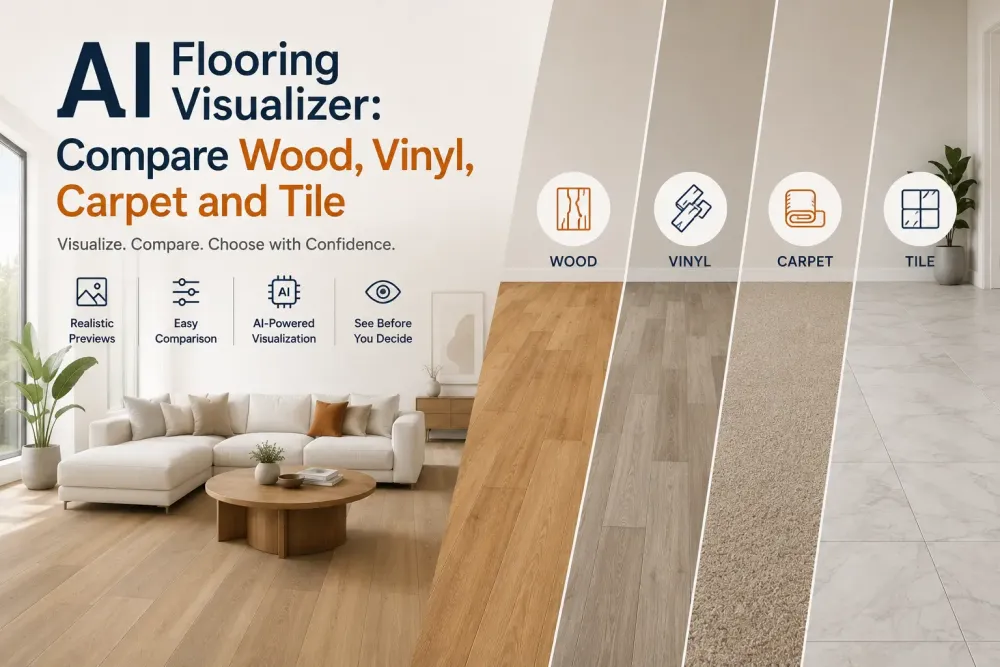
Aug 18, 2026
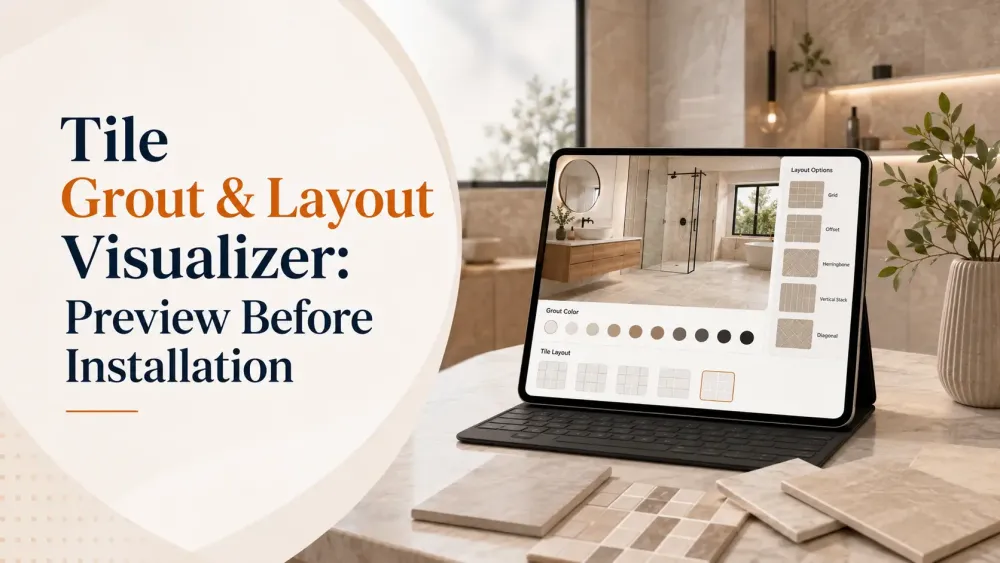
Aug 18, 2026
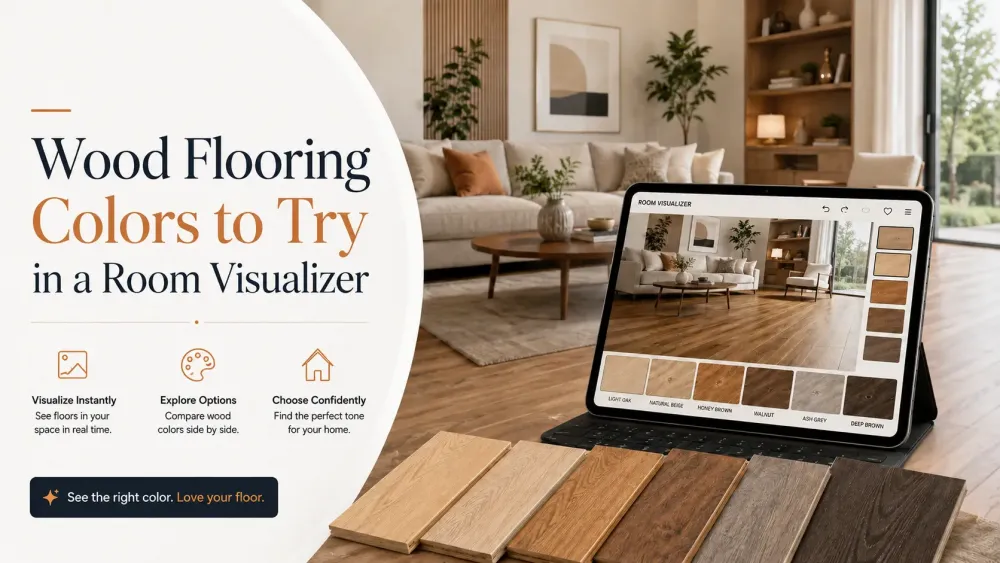
Aug 18, 2026

Aug 18, 2026
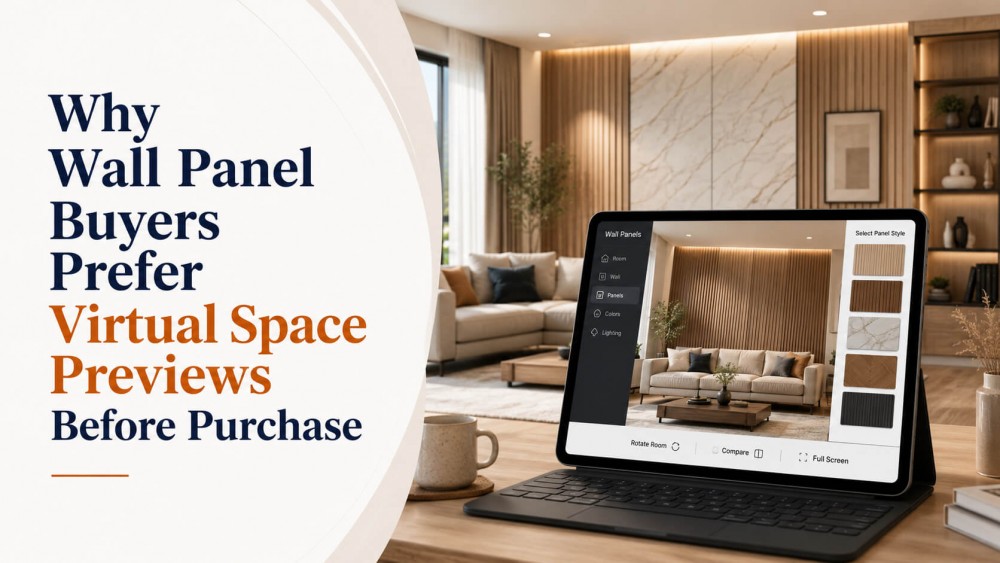
Jul 23, 2026
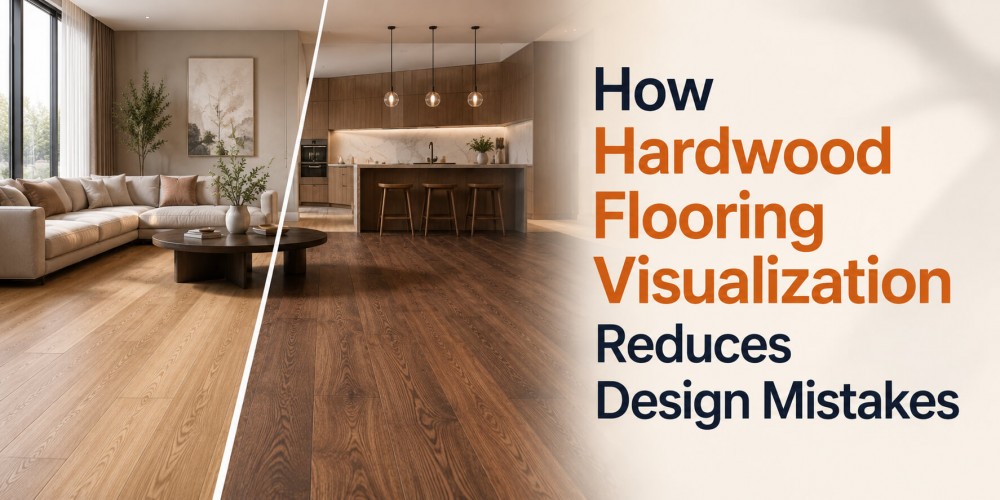
Hardwood flooring can completely change the character of a room.
The right wood tone can make a space feel warmer, brighter, larger, or more refined. The wrong choice can create the opposite effect, making the room feel dark, disconnected, overly busy, or visually unbalanced.
That is why choosing hardwood flooring from a small sample is so difficult.
A sample may show the grain, finish, and color, but it cannot reveal how the flooring will look across an entire room. It cannot show how the planks will interact with natural light, furniture, cabinets, wall colors, or the size of the space.
Hardwood flooring visualization helps solve this problem by allowing customers, designers, and retailers to preview flooring in context before installation begins.
Instead of relying on imagination, they can make decisions based on a clearer visual representation of the finished room.
Hardwood flooring is a major visual element.
Unlike a cushion, lamp, or decorative accessory, flooring covers a large portion of the room. Its color, direction, plank size, texture, and finish affect the overall appearance of the entire space.
A choice that looks attractive in a showroom may feel very different once installed.
Common design mistakes include:
These mistakes are often not caused by poor taste.
They happen because the buyer cannot accurately visualize the complete result before committing.
Traditional flooring selection usually begins with samples.
Samples are useful for understanding:
But a small sample represents only a tiny section of the final floor.
Hardwood flooring naturally includes variation. Different planks may contain lighter areas, darker areas, knots, grain changes, and tonal differences.
A customer may approve one sample without realizing how the full floor will appear once dozens of planks are installed together.
Visualization provides a wider perspective.
It helps buyers understand how the flooring may look across the whole room rather than evaluating one isolated piece.
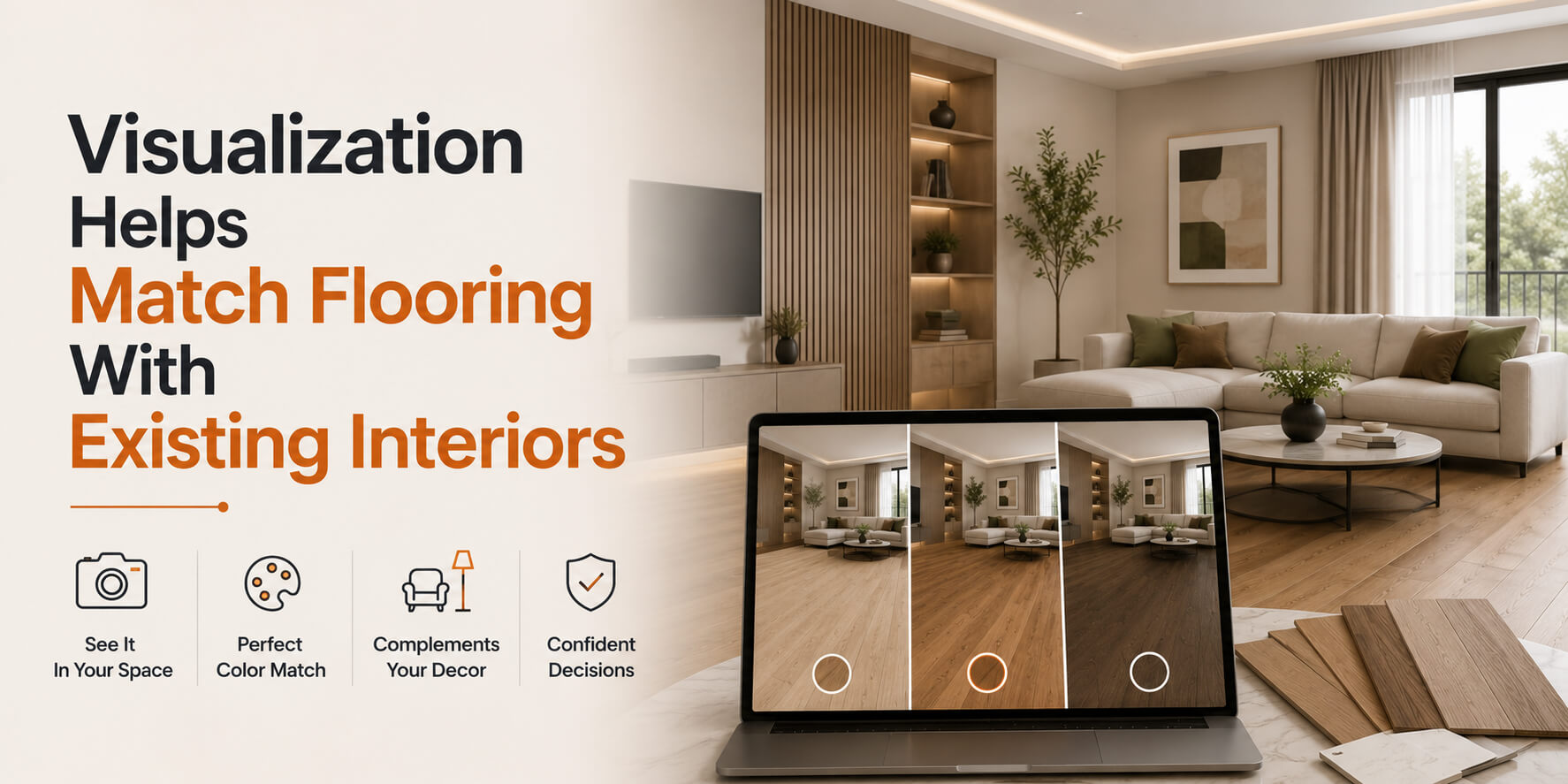
One of the most common hardwood flooring mistakes is choosing a color that does not work with the rest of the room.
A flooring sample might look attractive on its own but conflict with:
Wood tones can be especially difficult to coordinate because they may contain warm, cool, red, yellow, grey, or neutral undertones.
Two wood finishes may appear similar in a catalog but look noticeably different when placed beside existing furniture.
A hardwood flooring visualizer allows customers to preview the flooring inside the actual room.
This makes it easier to determine whether the floor complements the surrounding elements or creates an unwanted contrast.
Dark hardwood floors can create a luxurious and sophisticated appearance.
However, they can also make certain rooms feel smaller or heavier, especially when the space has limited natural light, dark furniture, or deep wall colors.
Customers often select dark flooring based on close-up product images without considering how much visual space it will occupy.
Once installed, the room may feel more enclosed than expected.
Visualization allows buyers to compare dark, medium, and light wood tones before making a final decision.
They can see how each option affects the perceived brightness and openness of the room.
This helps prevent one of the most expensive flooring regrets: realizing after installation that the chosen floor has changed the atmosphere of the space in the wrong way.
Plank dimensions influence the way a room feels.
Wide planks can create a clean, modern, and spacious appearance. Narrow planks may produce a more traditional or detailed look.
But the effect depends on the size and layout of the room.
Very wide planks may feel disproportionate in a compact area. Narrow planks may make a large open space appear visually busy.
Customers may struggle to understand these differences by looking at product specifications alone.
A dimension such as 180 mm or 220 mm means little without visual context.
Hardwood flooring visualization helps translate measurements into an understandable design experience.
Customers can compare how different plank widths appear across the room and select an option that feels balanced.
Wood grain adds natural character to hardwood flooring.
However, highly expressive grain patterns can become dominant when repeated across a large surface.
A sample with dramatic knots and movement may look beautiful in isolation but feel too busy across a full living room or commercial interior.
The opposite can also happen.
A subtle flooring design may appear plain as a sample but create an elegant and consistent finish when installed across a larger space.
Visualization helps buyers evaluate pattern density and repetition before installation.
This reduces the risk of choosing flooring that feels either too visually active or too uniform for the intended design.
The direction in which hardwood planks are installed can influence visual flow.
Planks are often positioned to follow the longest wall, lead toward a focal point, align with natural light, or connect adjoining rooms.
Choosing the wrong direction can make a room feel shorter, narrower, or visually disconnected.
For open-plan interiors, plank direction becomes even more important because the flooring must create continuity between multiple areas.
A flooring visualizer can help designers and customers compare different orientations before installation.
This allows them to make a more deliberate decision rather than relying on assumptions at the project site.
Lighting has a major effect on how hardwood flooring appears.
The same flooring can look different under:
A grey oak floor may appear warmer in one room and cooler in another. A honey-toned floor may look bright during the day but more orange under artificial light.
Showroom lighting cannot fully replicate the lighting conditions inside every customer’s home.
That is why a flooring choice that looks perfect in the showroom may feel different after installation.
Visualization using the customer’s room photo provides more relevant context.
Although digital previews should not replace physical samples, they can help customers identify potential lighting-related concerns before placing an order.
Without visualization, flooring selection can become a slow and confusing process.
Customers may take several samples home, place them in different areas, photograph them, ask family members for opinions, and return to the showroom multiple times.
Even then, they may remain uncertain.
A hardwood flooring visualizer allows multiple products to be compared inside the same room.
Customers can explore:
This side-by-side comparison helps customers identify their preferences more quickly.
Instead of trying to remember how each sample looked, they can evaluate options within a consistent visual setting.

Interior designers often understand how a material may influence a space.
Clients may not.
A designer might explain that a lighter oak will create greater visual continuity or that a darker walnut finish will add contrast. But verbal descriptions can still be interpreted differently.
Visualization gives both parties a shared reference.
The designer can present multiple flooring options and explain the reasoning behind each choice.
The client can respond to what they actually see rather than trying to interpret technical design language.
This reduces misunderstandings and helps projects move toward approval faster.
Flooring changes become increasingly expensive as a project progresses.
Changing the selection before ordering may be simple.
Changing it after delivery, installation, or completion can involve:
Visualization moves more decision-making to the beginning of the project.
By reviewing flooring options in context before purchase, customers can identify potential problems earlier.
This reduces the likelihood of last-minute changes and improves project planning.
Customers often delay flooring purchases because they fear making the wrong decision.
Hardwood flooring is a long-term investment. It can be expensive to replace, and it has a significant effect on the appearance of the property.
When buyers cannot picture the final result, postponing the purchase feels safer.
Visualization reduces that uncertainty.
It gives customers a clearer understanding of how the product may look in their room, helping them move from interest to confidence.
For retailers and flooring brands, this can lead to:
The visualizer does not simply display flooring.
It helps customers make decisions.

Hardwood flooring visualization can support the customer journey at several stages.
Visitors can explore flooring collections and preview products before contacting the business.
Sales teams can help customers compare flooring options inside room scenes or uploaded photos.
Designers can present visual alternatives and explain how each product affects the room.
Retailers can send personalized visualizations alongside quotations and sample information.
Sales teams can restart conversations by offering new flooring combinations based on the customer’s room.
This creates a more connected experience from product discovery to final selection.
Tilesview helps flooring brands, retailers, manufacturers, and designers present hardwood products in realistic room environments.
Customers can upload a photo of their space and preview different flooring options before making a purchase decision.
With Tilesview, businesses can help customers evaluate:
This allows customers to move beyond small samples and static product images.
They can explore how the flooring may transform the complete room.
For flooring businesses, this creates a more interactive buying experience and gives sales teams a stronger tool for reducing uncertainty.
Most hardwood flooring mistakes happen before installation.
They begin when customers are asked to make a major visual decision using limited information.
Small samples, showroom displays, and product photos can help, but they do not always show how the flooring will work inside a specific space.
Hardwood flooring visualization gives customers and designers the context they need.
It helps them compare colors, plank sizes, grain patterns, finishes, and room compatibility before committing to a purchase.
The result is not only a better-looking floor.
It is a more confident customer, a smoother design process, and a lower risk of expensive changes.
Give customers a clearer way to evaluate flooring before installation.
With Tilesview, hardwood flooring brands and retailers can turn static product selection into an interactive visualization experience.
Help buyers preview the possibilities, reduce design uncertainty, and choose the right flooring for their space.

Anand Bhoraniya is a technology entrepreneur and visualization innovator at Tilesview, specializing in AI-powered room visualization software for tile, flooring, paint, and wall covering brands. He regularly shares insights on AI visualization trends, virtual showroom experiences, personalized design technology, warm minimalist interiors, and photorealistic room design solutions.
Get the latest insights on room visualizer, interior design trends, and product updates delivered to your inbox.
No spam. Unsubscribe anytime.